
Sustainability isn't a compliment to our work.
It's the framework everything else is built around.
SUSTAINABILITY
The short version is on this page. The CANIE Accord commitments, the full inventories and the voices from the work each have their own page — so you can go as deep as you want, and no deeper.
837.71
TCO₂E GROSS EMISSIONS
Verified independently, every year
11 Staff, 434 participants
129.20
Via our own projects (+20% since 2024)
TCO₂E ACTIVELY OFFSET
723
ClimeCo · Yacumama, Peru
TCO₂E EXTERNALLY RETIRED
0.0314
Verified independently, every year
CONTROLLABLE TCO₂E / WEEK
Carbon Negative
STATUS 2019-2025
OUR APPROACH
Carbon negative isn't a claim we make by purchasing credits.
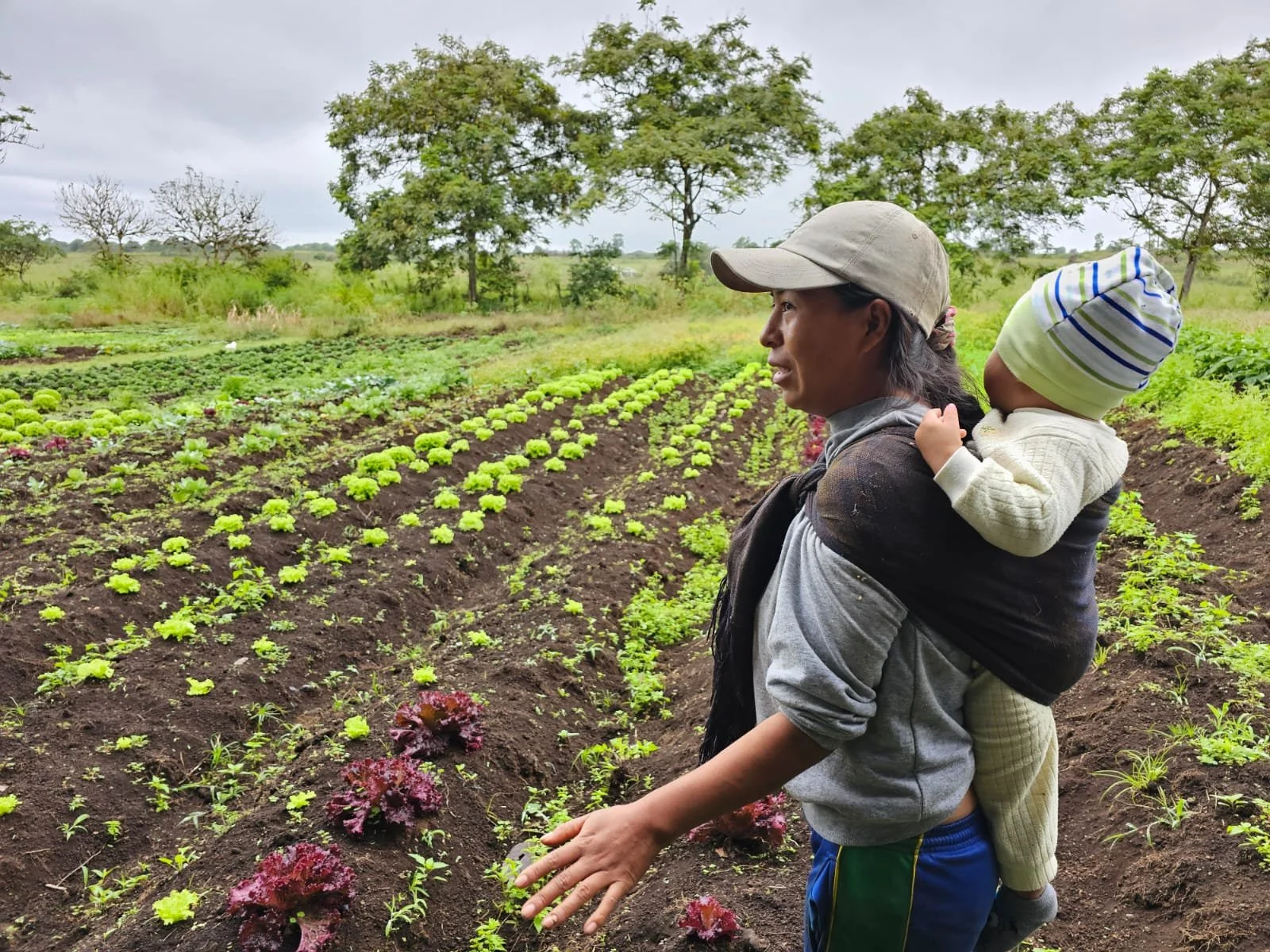
Most organizations that claim carbon neutrality do so by buying external credits alone. IOI has spent seven years building a parallel approach: investing in regenerative agriculture, local food production, mangrove restoration, and ecosystem repair.
In 2025 that active offsetting portfolio grew again – regenerative agriculture expanded to 105.5 ha (+27%) and additional crops were added. The result is 129.20 tCO₂e of mitigation that simultaneously supports food security, biodiversity and local livelihoods, generated inside the communities at the very center of our mission.
Combined with verified external offsetting through the Yacumama Forest Carbon Project in Peru, IOI is carbon negative – and the goal is to keep closing the gap between what active offsetting covers and what remains, year by year.
It is the result of seven years of building active, locally grounded mitigation – and the ambition to keep growing it until external offsetting becomes the exception, not the rule.
Annual GHG Emissions & Mitigation Report 2025
GO DEEPER
COMMITMENTS
39 CANIE commitments – and the ones we declined.
What we adopted, what we dropped, what we refused to promise, plus our SDG and sector-framework alignment as filed with Ecuador's government.
REPORTS & DATA
The full inventories, year on year.
2025 at a glance, the 2024 → 2025 comparison, our offsetting history and certificates, external evaluation results, and every document to download.
STORIES & IMPACT
Voices from the work.
Participants and field teams on both islands — the people who can tell you what the work feels like from the inside.
Read the evidence behind the headline.
PARTICIPATION
IOI is Carbon Negative, and every participant is part of how that gets done. In addition to every program being designed with a goal of sustainability, included in each program contribution is $15 USD per week that goes toward passive offsetting – the externally verified carbon credits that cover the residual emissions from participant flights. IOI's active offsetting work – regenerative agriculture, local food production and ecosystem restoration, which mitigates all of our Scope 1 and 2 emissions – is funded separately through program operations and participant program fees.
The contribution is included by default; individual participants can opt out during booking, and IOI covers the full cost of its climate commitments either way. For study abroad and faculty-led programs the contribution is agreed at institutional level with the university or program office and set out in the program budget.
Carbon Negative, and what participation contributes
OUR COMMITMENTS
39 commitments –
including the ones we declined.
IOI was an early signatory of the CANIE Accord, the climate-action framework for international education. In 2025 we reviewed every commitment against CANIE's full menu of 70 possible actions and published the results honestly.
What the CANIE Accord is
CANIE ACCORD
CANIE – Climate Action Network for International Educators – is the sector's climate-action framework. Its Accord sets out a menu of roughly 70 concrete actions across five articles, covering emissions measurement and reduction, program design, advocacy, education and organizational governance. Signatories choose the actions they will be held to, then report publicly on progress. IOI signed in 2022 and reviewed every action again in 2025.
What changed between 2022 and 2026
Total actions adopted
Articles covered
Public reporting
2022 COMMITMENT
30
All five (4–8)
Climate Action Plan only
2026 COMMITMENT
39 (+10 added, −1 dropped, 2 declined with stated reasons)
All five (4–8)
Climate Action Plan + Annual GHG Report, now a standing yearly commitment
-
Thirty-nine actions across all five articles of the Accord. In practice they group into five areas of work we report against every year:
Measure everything, publicly. A full annual greenhouse gas inventory across all emission scopes – including participant flights – published in an Annual GHG Emissions & Mitigation Report, is now a standing yearly commitment rather than a one-off.
Reduce what we can control. Accommodation, transport, food, waste and team travel, tracked through a controllable emissions KPI per participant week that has to improve year on year.
Mitigate locally before we buy credits. Grow active, community-based mitigation – regenerative agriculture, local food production, ecosystem restoration – and neutralize 100% of the remaining footprint through verified external offsets in the region.
Build climate into the programs themselves. Climate and sustainability content embedded in participant training and orientation, as well as our curricula, co-designed with local institutions.
Share the method, not just the results. Publish the methodology, the assumptions and the gaps, and contribute to sector frameworks so other organizations can reuse the work.
-
We stopped committing to "encourage regulators and accreditation bodies to include climate criteria in their standards" – we don't have a realistic channel of influence there, and we'd rather commit to things we can actually move.
-
CANIE's menu includes a 25%-per-year emissions reduction target. Flights are roughly 94–95% of our footprint, and cutting that by 25% annually isn't achievable without abandoning the travel-based model itself. We marked it honestly as not applicable, and commit instead to full annual neutralization of all remaining emissions.
-
Older IOI materials refer to a "Net-Zero 2025 Strategy." We've retired that language. Under the SBTi Net-Zero Standard, net zero requires roughly 90% absolute emissions reduction – not realistic while flights remain core to our operations in remote locations. Carbon Negative is a claim we can already achieve, every year.
Full CANIE Accord signatory profile: canie.org
Documented in our official filings.
Not a marketing claim.
SDG ALIGNMENT & SECTOR FRAMEWORKS
Our 2025 project agreement with the Galapagos National Parks Direction (Dirección del Parque Nacional Galapagos) formally maps program activities to six UN Sustainable Development Goals, against Ecuador's own National Development Plan.
SDG 2 – Zero Hunger
SDG 3 – Good Health & Well-Being
SDG 11 – Sustainable Cities & Communities
SDG 12 – Responsible Consumption & Production
SDG 14 – Life Below Water
SDG 15 – Life on Land
SDG
Regenerative agriculture, food sovereignty & security & safety (also our active carbon-offsetting mechanism)
Public Health programs and Veterinary campaigns in our communities
Host-family program, community infrastructure, green urban development
Import-reduction impact of local food production and import policy interventions
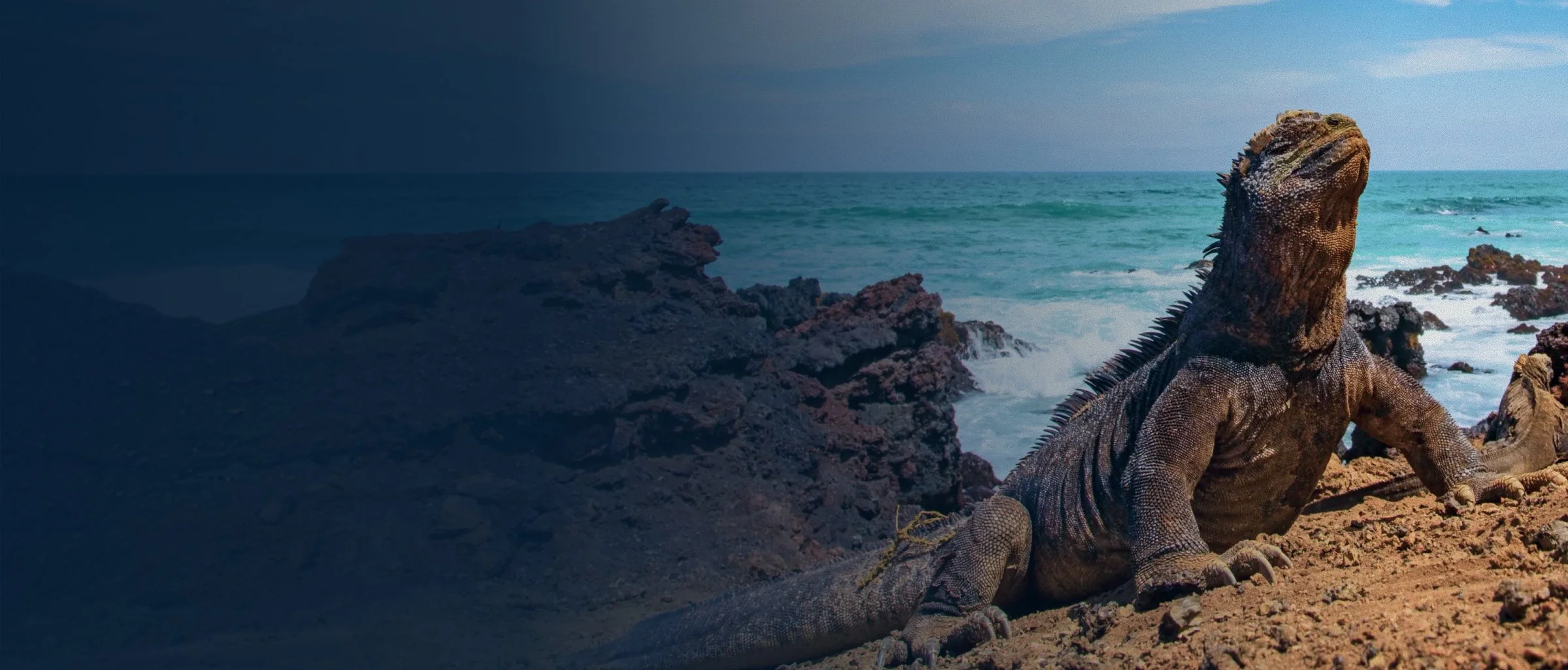
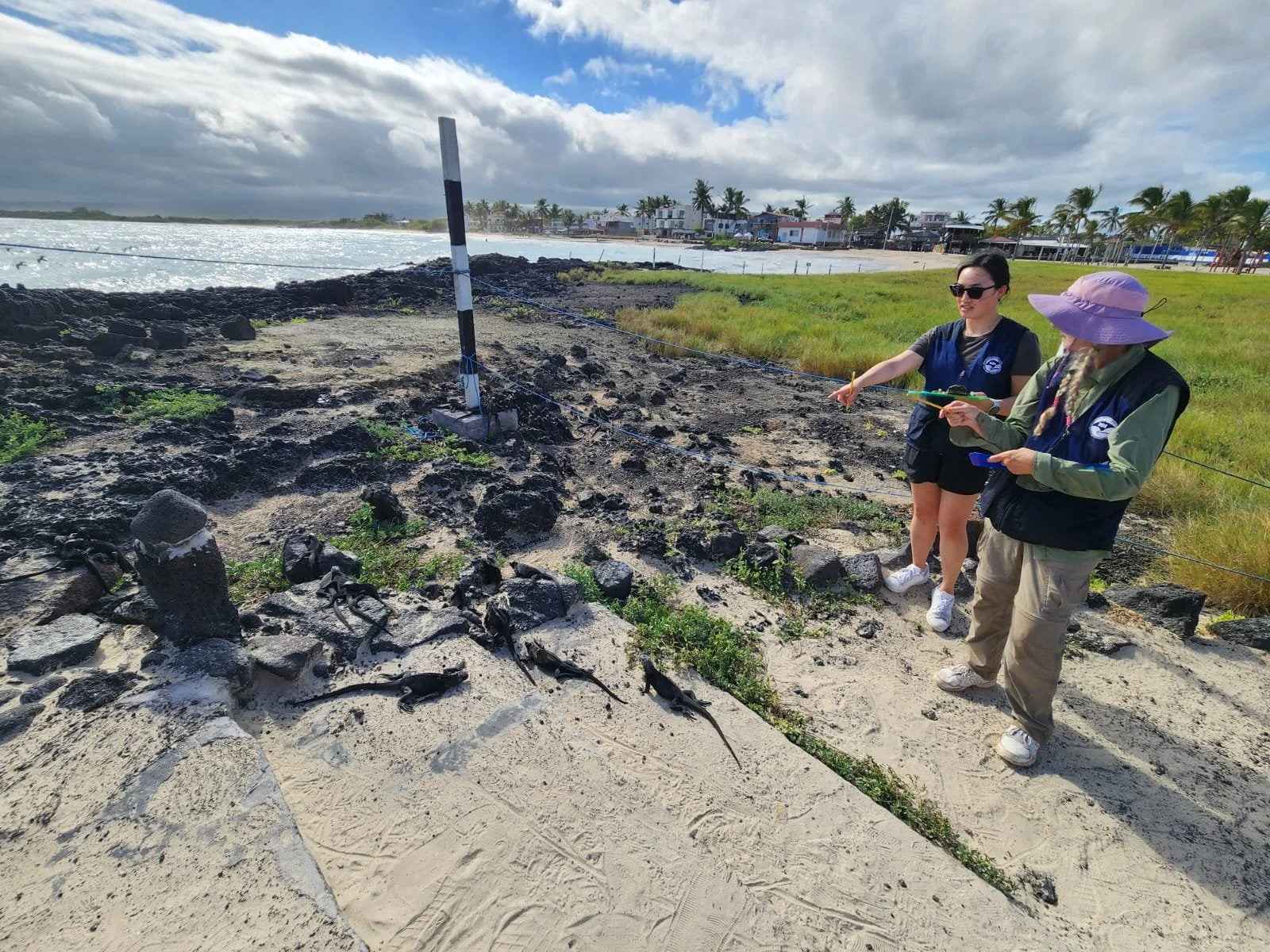
Marine iguana and sea turtle nesting protection, Marine research projects
Forest nursery, giant tortoise breeding program, invasive species control
-
IOI doesn't just cite these guidelines – our own Sustainability & Strategic Partnerships Director, Daniel Ponce-Taylor, served on the Forum on Education Abroad's SDG Working Group (2020–2024), the committee that wrote them.
-
IOI is a signatory of the Glasgow Declaration, committing to halve tourism-related emissions by 2030 and reach net zero as soon as possible before 2050 – reported against in our annual Climate Action Plan rather than kept as a standalone pledge page.
HOW OUR OWN FILINGS DOCUMENT IT

REPORTS & DATA
Every number we report,
and how we got to it.
Four views of the same inventory: 2025 at a glance, the year-on-year comparison, our offsetting history with certificates, and Ecuador's own external evaluation of the programs.
Verified independently, every year
837.71
TCO₂E GROSS EMISSIONS
All scopes
129.20
TCO₂E ACTIVELY OFFSET
Our own projects
708.51
TCO₂E NET RESIDUAL
723 retired · +15.53 to 2026
0.0314
CONTROLLABLE TCO₂E / WEEK
Improved 10% on 2024
434
PARTICIPANTS
The 2025 inventory, four ways.
2025 INVENTORY
This is the raw data behind everything we claim. Start with the at-a-glance summary below to get the shape of the year; use the other tabs for the year-on-year comparison, the offsetting record with certificates, and Ecuador's external evaluation of the programs.
The summary below follows the same order as our accounting: how much program we ran, what it emitted, how much of that we mitigated ourselves, what we then had to offset externally, and the efficiency measures we hold ourselves to. Read top to bottom and you have the whole year before opening a single report.
1. How many participants we had
Participants
Participant weeks
2. What it emitted
METRIC
Gross emissions, all scopes
Share of that footprint from flights
METRIC
Controllable emissions per participant week (excl. all flights)
Status
METRIC
2025 VALUE
2025 VALUE
837.71 tCO₂e
≈94–98%
2025 VALUE
129.20 tCO₂e
708.51 tCO₂e
4. What we offset externally
2025 VALUE
723 tCO₂e · surplus +15.53 tCO₂e carried to 2026
2,766 tCO₂e
5. Efficiency and status
2025 VALUE
0.0314 tCO₂e — improved 10% on 2024
Carbon Negative — verified independently every year
Active offsetting in 2025 — the verified composition (129.20 tCO₂e)
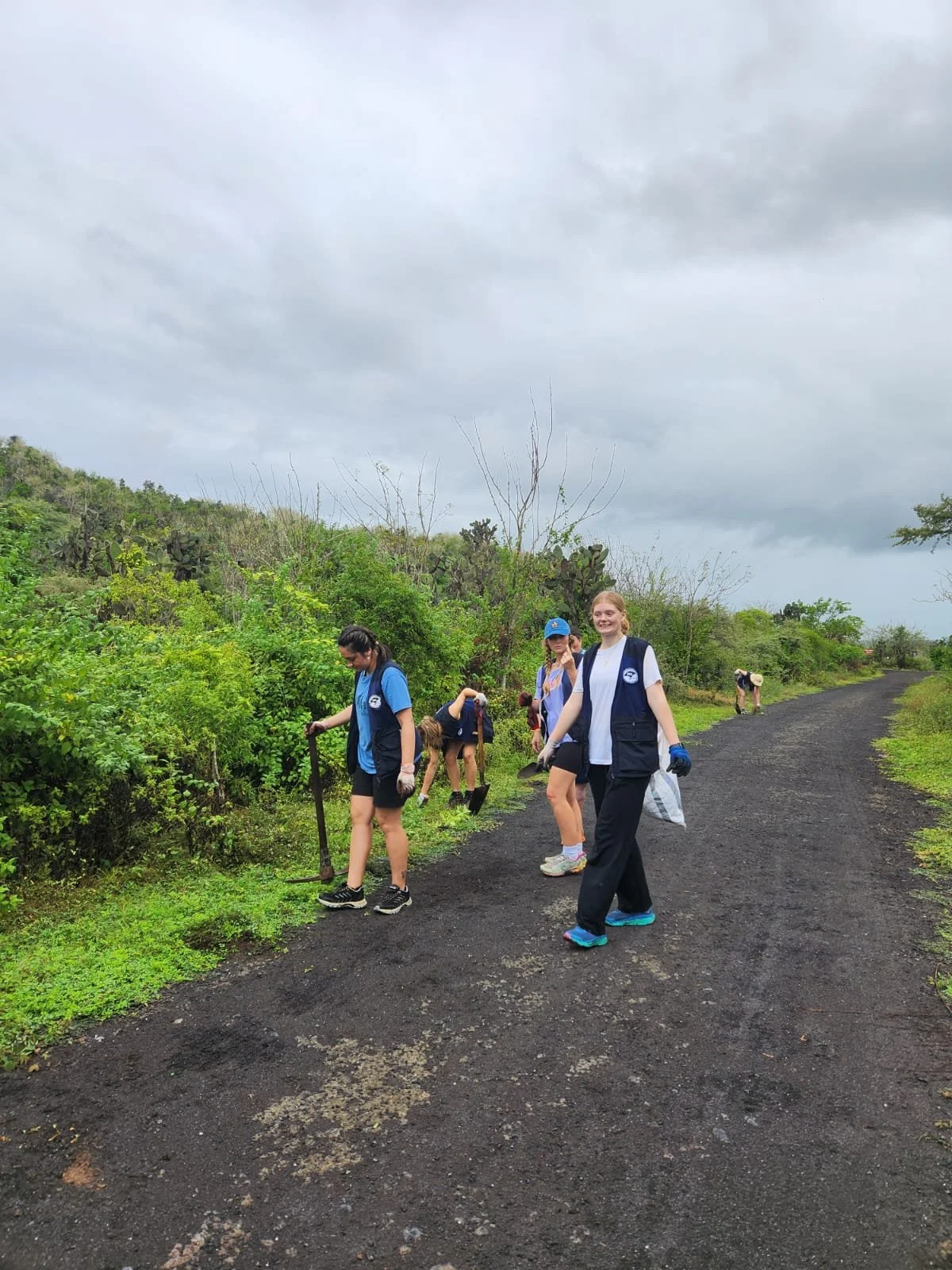
No-till + hooved animal rotation at 0.9 tCO₂e/ha/yr (Poeplau & Don 2015; Teague et al. 2016)
Avoided shipping vs. mainland import
Avoided shipping vs. mainland import
Avoided shipping vs. mainland import
Measured waste diversion
–
434
1,296
3. What we mitigated ourselves
METRIC
Active offsetting (regenerative agriculture + local food)
Net emissions remaining after active offsetting
METRIC
Credits retired for 2025 (ClimeCo — Yacumama, Peru)
Cumulative credits retired since we began offsetting (2019–2025)
Soil carbon — regenerative agriculture (105.5 ha)
Avoided import — milk (562,100 kg)
Avoided import — bananas (21,797 kg) — new in 2025
Avoided import — cilantro, pepper, tomato, cucumber
Beach & marine debris clean-up (2,264 kg)
Total active offsetting
Deliberately not counted yet: the mangrove nursery and reforestation work (1,383 seedlings) and invasive-species control across 15,214 m². The benefit is real; the methodology isn't finalized, so it stays out of the total until it can be measured with the same rigor.
METRIC
TCO₂E
94.99
32.04
1.24
0.91
0.01
129.20
TCO₂E
2025 is the first year we can put two full inventories side by side, on the same methodology. Programs grew 46% in participants — and every non-flight operational metric still improved.
Participants
Participant weeks
Average program length
Gross emissions
tCO₂e / participant week
Controllable tCO₂e / week (excl. all flights)
Participant flight tCO₂e per passenger
Active offsetting
Regenerative agriculture area
Net residual, passively offset
METRIC
2025 VALUE
298
1,134
3.8 weeks
690.61 tCO₂e
0.609
0.0350
0.510
108.10 tCO₂e
83.3 ha
582.51 tCO₂e
2025 VALUE
434 (+46%)
1,296 (+14%)
3.0 weeks (−22%)
837.71 tCO₂e (+21%)
0.646 (+6%)
0.0314 (▼10% — improved)
0.421 (▼17% — improved)
129.20 tCO₂e (+20%)
105.5 ha (+27%)
708.51 tCO₂e (+22%)
-
One dominant cause: average program length fell from 3.8 to 3.0 weeks, spreading the same fixed return flight over fewer weeks (+0.130/week). International team flights also entered Scope 1 for the first time (+0.008/week). Both were partly offset by better participant flight efficiency (−0.098/week) and a 10% improvement in controllable emissions (−0.004/week). Longer stays are the main lever, and a staff travel policy is a 2026 priority.
-
Hotel nights (1,846) and homestay nights (6,954) are now costed separately: with 79% of nights in homestays, which carry a 70% lower emission factor, accommodation emissions fell from 24.89 to 20.23 tCO₂e — a 19% reduction — despite an 84% increase in total nights. And international team flights are recorded in Scope 1 for the first time (11.95 tCO₂e across 16 trips) — a number we can directly control, so we now report it.
We first minimize our emissions, then mitigate as many as possible internally and sustainably, and only then offset the remainder externally — while we keep growing our own active capacity.
Active offsetting — which covers all Scope 1 and 2 emissions — is funded through IOI's program operations and participant program fees. Passive offsetting, the externally verified credits covering the residual from participant flights, is supported by the opt-out $15 per week contribution included in each program contribution.
2019–2021
Founding offsets via Ecologi
Since 2019 we have offset and retired over 350 tonnes of Scope 3 emissions through Ecologi — every tonne certified to Gold Standard or the Verified Carbon Standard, with funding allocated on the Project Drawdown framework.
Cumulative external offset record, with serial numbers
2019–2022
2022–2024
2025
Cumulative total, 2019–2025
PARTNER
Ecologi
ClimeCo
ClimeCo
–
Every certificate is published in full — retirement volumes, project IDs and serial numbers exactly as issued.
Certificates
ClimeCo Certificate 2025 (723 tCO₂e, Yacumama) – PDF
ClimeCo Certificate 2022–2024 (1,693 tCO₂e) – PDF
CAR1863-5 Mexico Forest Restoration – project summary – PDF
Ecologi Certificate (350 tCO₂e) – PDF
2022–2024
Scaling up – 1,693 tCO₂e retired via ClimeCo
As programs scaled, residual emissions grew. We partnered with ClimeCo and retired 1,693 tonnes of CO₂e through the CAR1864 Bonos Aroma Del Mayab project — part of the CAR1863–65 Mexico Forest Restoration initiative in Quintana Roo, restoring semi-evergreen rainforest with local ejido communities. That figure is what remained after our own conservation work.
-
Credits are bought against the reporting year and retired once that year's footprint is finalized, which is why the compliance date falls in the following year. Correcting the accommodation split lowered the final residual below the purchased volume, so 15.53 tCO₂e of surplus carries into 2026 — we hold a small deliberate buffer rather than round down.
PERIOD
PROJECT
Multiple (Gold Standard / VCS / CCB)
CAR1864 v2021 — Bonos Aroma Del Mayab (Mexico Forest Restoration, Quintana Roo)
VCS1133-2014 — Yacumama Forest Carbon Project, Peru (REDD+)
–
PARTNER
350
1,693
723
2,766
2025
723 tCO₂e retired for the 2025 residual
After 129.20 tCO₂e of active offsetting, the 2025 residual of 708.51 tCO₂e was covered through ClimeCo's VCS1133 Yacumama Forest Carbon Project in Peru — a Verra-verified REDD+ project protecting Amazonian forest from unplanned deforestation.
PROJECT
25 July 2022 · ID d3baf01
Purchased 30 Dec 2025 · retired 4 Feb 2026 · serials CAR-1-MX-1864-42-2085-QR-2021-8428-18113 to 19805
Compliance date 10 July 2026 · residual 708.51 · surplus +15.53 to 2026
–
Unlike most CANIE self-reporting, IOI's Isabela programs are evaluated every year by an external body, filed directly with Ecuador's Ministry of Foreign Affairs under our formal cooperation agreement with the Ecuadorian government.
2018
2019
2022
2024 (H1)
2024
2025
YEAR
RESULT
Galapagos Biosecurity and Control Regulation Agency evaluation: 100% of planned objectives met
Galapagos Biosecurity and Control Regulation Agency evaluation: 88.6% executed — 2 activities suspended for disclosed external reasons
Galapagos National Parks Direction: 200 volunteers · 6,315 volunteer hours logged
Galapagos National Parks Direction: 247 volunteers · 9,828 volunteer hours logged
Galapagos National Parks Direction external evaluation (Cancillería): 100% technical execution · zero incidents · certified no risk of non-compliance
$258,671 USD annual program, formally mapped to Ecuador's National Development Plan and 6 UN SDGs
DOWNLOADS
Read the source documents.

STORIES & IMPACT
Reports say what we measured.
These are the people who lived it.
Partner universities, faculty leaders and the teams on both islands, describing what the programs delivered on the ground.
VOICES FROM THE FIELD
In their own words.
"Thank you so much for an amazing, unforgettable experience! Your arrangements have been impeccable! Thank you as well for the presentation! We will be ready for the pick up tomorrow. This has been an incredible journey with so much for potential collaboration. I have already asked two friends to volunteer for IOI. Let's see what they say. I have so much to take back to my university and I am sure that my colleagues and our students will visit soon. We have learnt so much!"
Shernice · Western University, South Africa
"My sincere thanks to both of you for once again making our 2026 Galapagos Study Abroad program such a successful and meaningful experience. As was the case last year, IOI delivered an exceptional program, giving students the opportunity not only to experience the extraordinary landscapes, biodiversity, and history of the islands but also to immerse themselves in what it is like to live there and appreciate the close relationship between the locals and their unique environment."
JUAN GONZALEZ · UTRGV
"The visit to the elementary school was especially interesting because we got to see how conservation is being introduced to students at a young age. Visiting the local farms and learning about pesticide-free farming and sustainable practices also showed us how conservation is really part of everyday life on the island. What really stood out to me was how the whole community plays a role in protecting the islands and preserving what makes them special."
GARY · PRAIRIE VIEW A&M UNIVERSITY
"The work doesn't stop when a group flies home. The nests still get walked, the seedlings still get watered, the data still gets handed to the Park."
IOI field team · Isabela, Galapagos

Fifteen years on Isabela in partnership with Galapagos National Parks Direction, the Galapagos Biosecurity and Control Regulation Agency, and the Galapagos Regional Government — over 277,500 logged hours with those partnerships independently evaluated rather than self-assessed.
GuideStar Gold Seal of Transparency
ClimeCo EcoCommitted Partner™ 2026 (Small Business)
CANIE Accord signatory (since 2022)
UN SDG Partnership (sustainabledevelopment.un.org)
Forum on Education Abroad – Council Board representation
GoAbroad Innovation in Sustainability winner (2021): Regenerative Agriculture For Food Security And Climate Change In Galapagos
PIEoneer Awards 2023 – Sustainability International Impact Award, highly commended
Gap Year Association – Sustainability Committee co-chair
GoAbroad finalist (2019): Innovative New Program, Volunteer Abroad – Galapagos Sustainable Agriculture and Urban Gardening Initiative
The Forum on Education Abroad 2023 finalist – Award for Advancing the UN SDGs through Education Abroad
Institutional recognition
RECOGNITION