
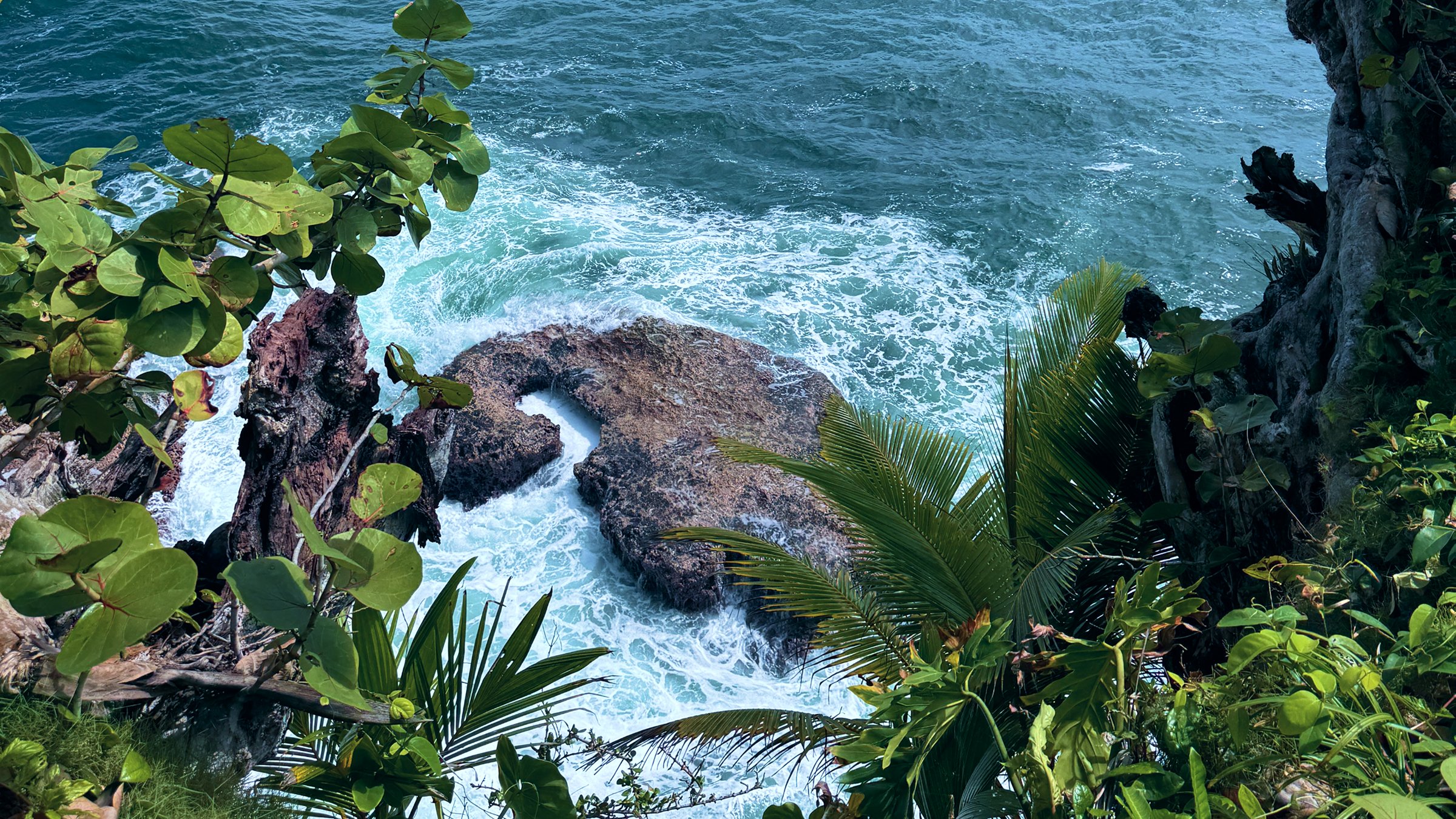
One model, two archipelagos –
built around what local institutions ask for.
OUR PROJECTS
IOI runs long-term sustainability projects in Isabela, Galápagos and Cayos Cochinos, Honduras, organized around conservation, sustainable agriculture, education and social development – with hard-won regional knowledge transferring between sites.

Where we work
OVERVIEW
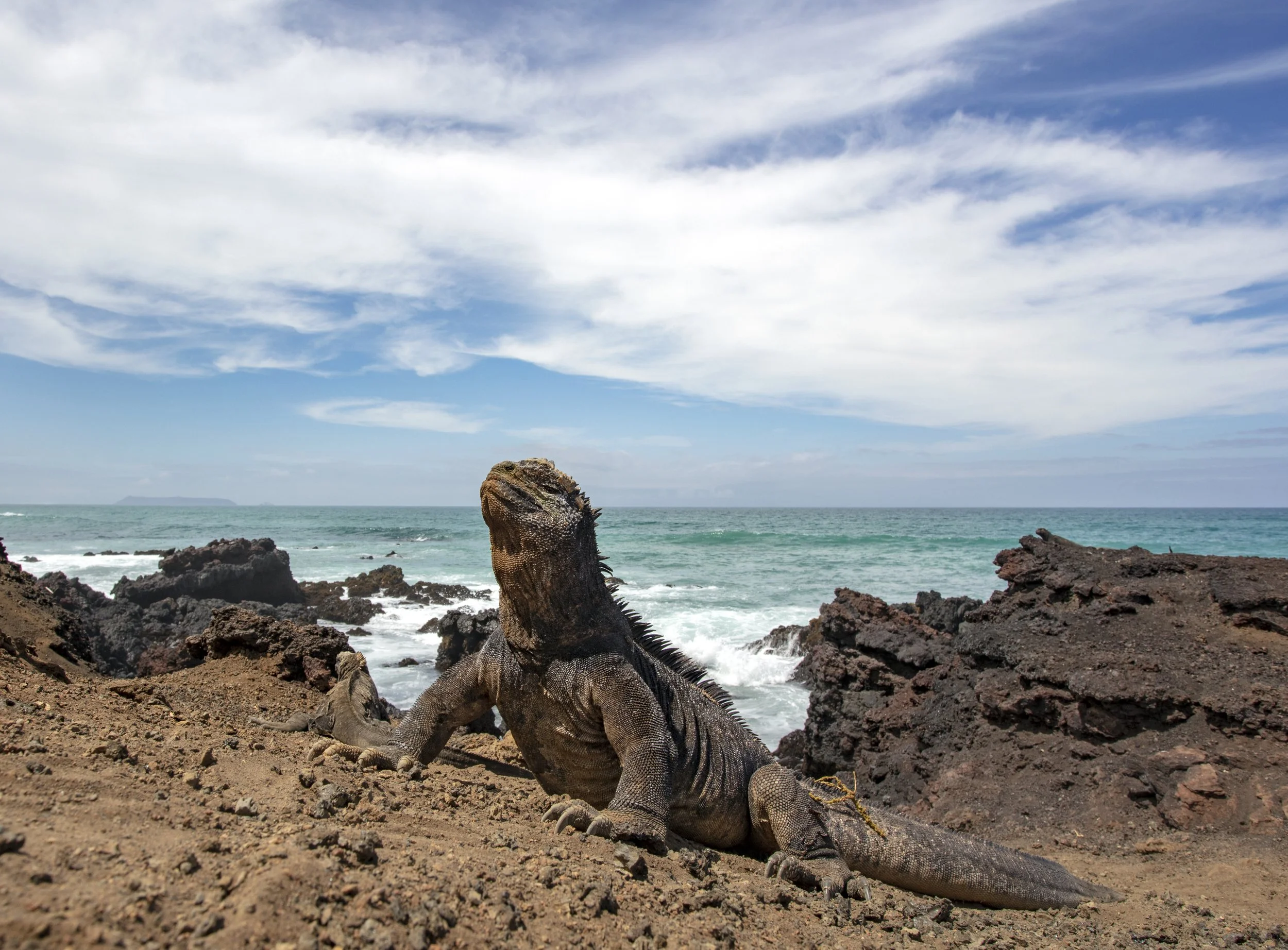
Isabela, Galápagos
Our founding site. A standing partnership with Ecuador's Galápagos National Park (DPNG), its biosecurity agency (ABG) and its governing council (CGREG) – evaluated independently every year since at least 2018, most recently certified at 100% program execution.
15+ years · independently evaluated every year
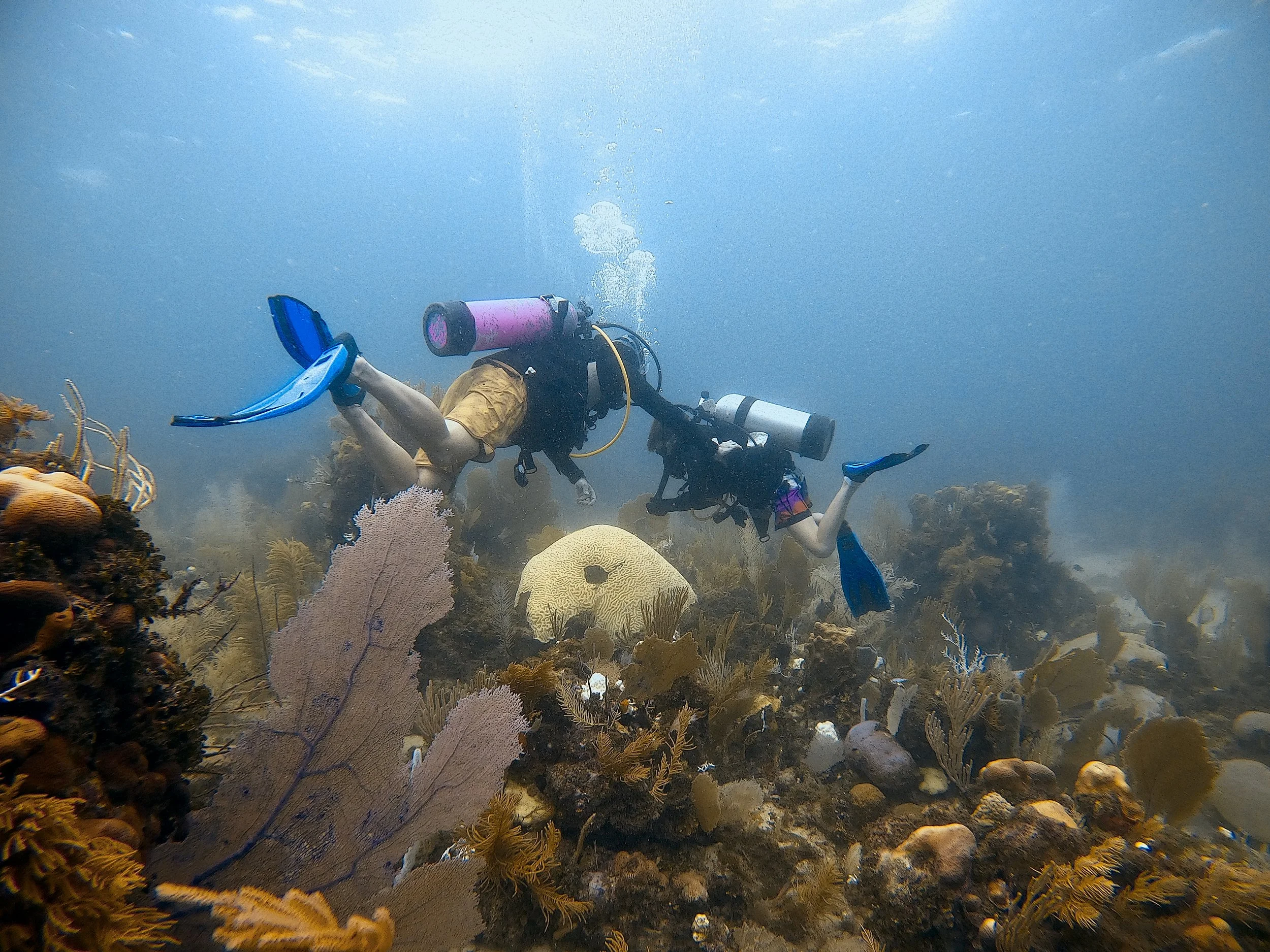
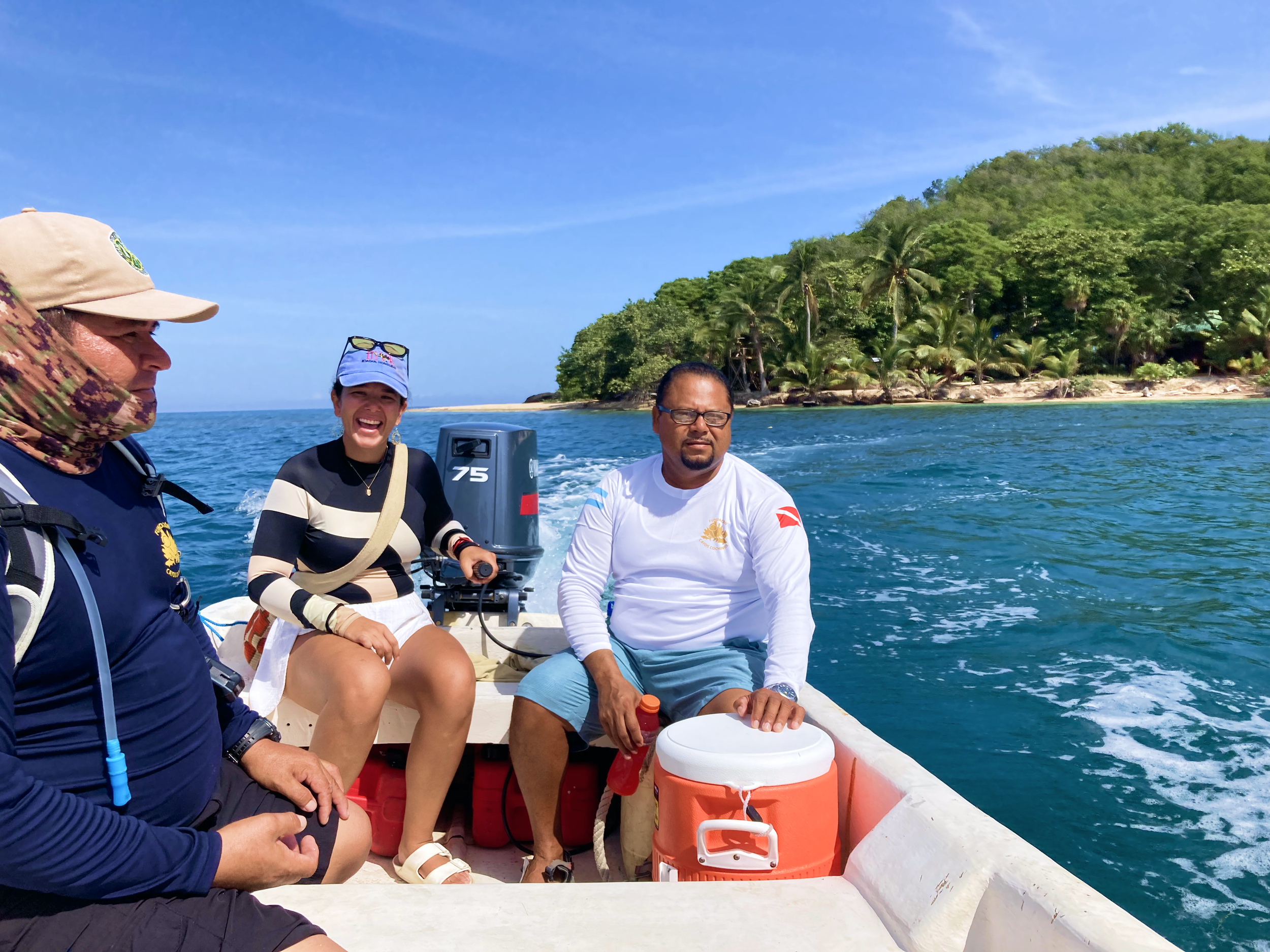
A partnership with Fundación Cayos Cochinos that carries nearly two decades of Isabela practice into a second protected archipelago: long-term projects built around what local institutions say they need, with community priorities setting the agenda. Here that means deeper engagement with the Garifuna communities – the same model, transferred deliberately, starting with listening.
New in 2025 · modeled on Isabela
Cayos Cochinos, Honduras
Giant tortoise captive breeding at the Arnaldo Tupiza Chamaidán breeding center – feeding, monitoring and habitat maintenance
Sea turtle nesting protection and monitoring on Puerto Villamil beach, through the nesting season
A native forest nursery, growing endemic and native flora for restoration sites across Isabela
Marine iguana population monitoring and habitat protection
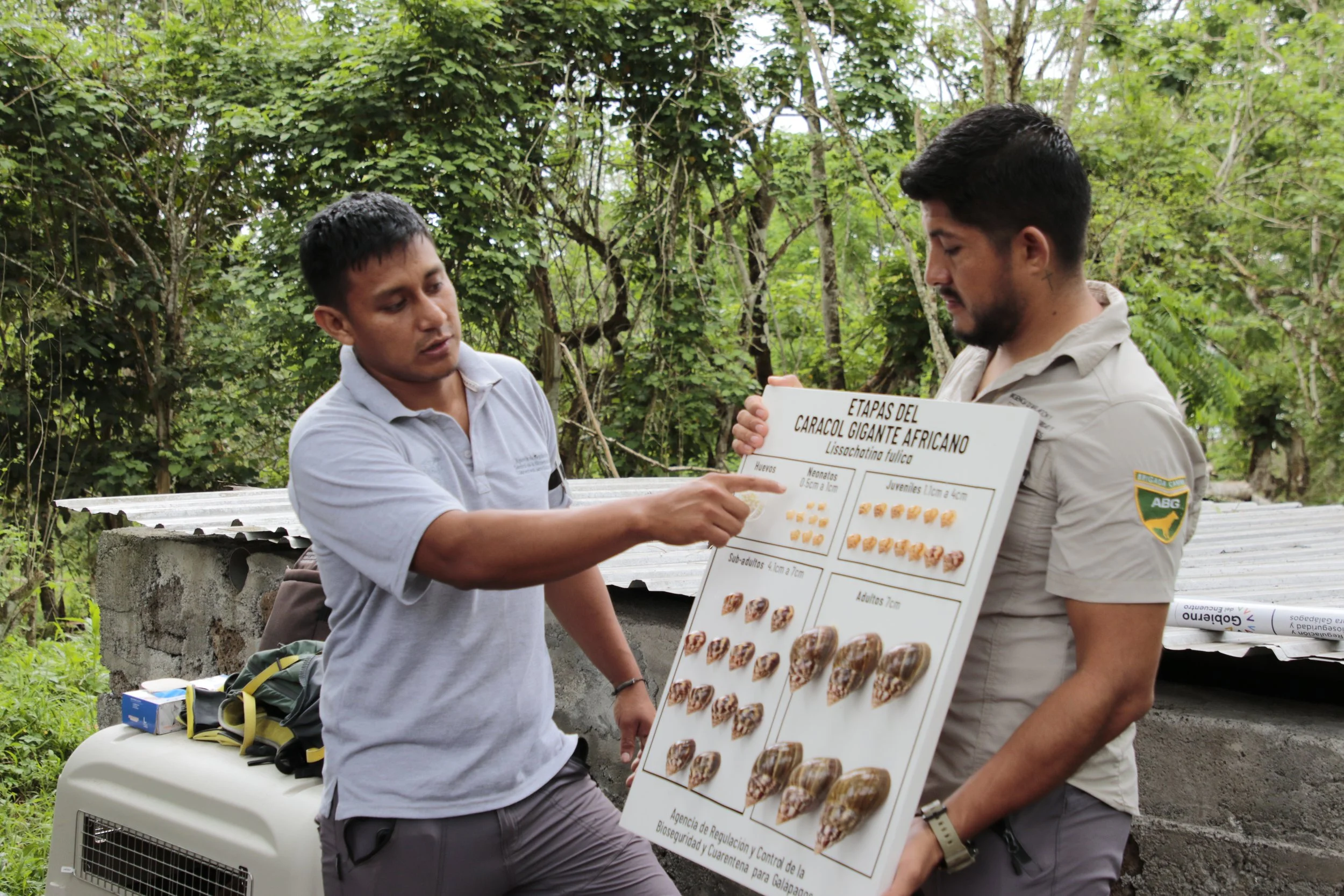
Biosecurity support with ABG – vaccination, sterilisation and pest-control campaigns that protect endemic wildlife from introduced disease and invasive species
Scientific research under active DPNG-issued permits, with results presented annually to Park staff and the local community
The track record
This isn't a claim we're making about ourselves – it's independently measured every year by our government partners. Volunteer contribution has grown from 200 volunteers logging 6,315 hours in 2022, to 247 volunteers logging 9,828 hours in just the first half of 2024. Our most recent annual evaluation, filed with Ecuador's Ministry of Foreign Affairs, certified 100% program execution with zero incidents reported.
Not alongside the Galápagos National Park's programs – inside them.
CONSERVATION
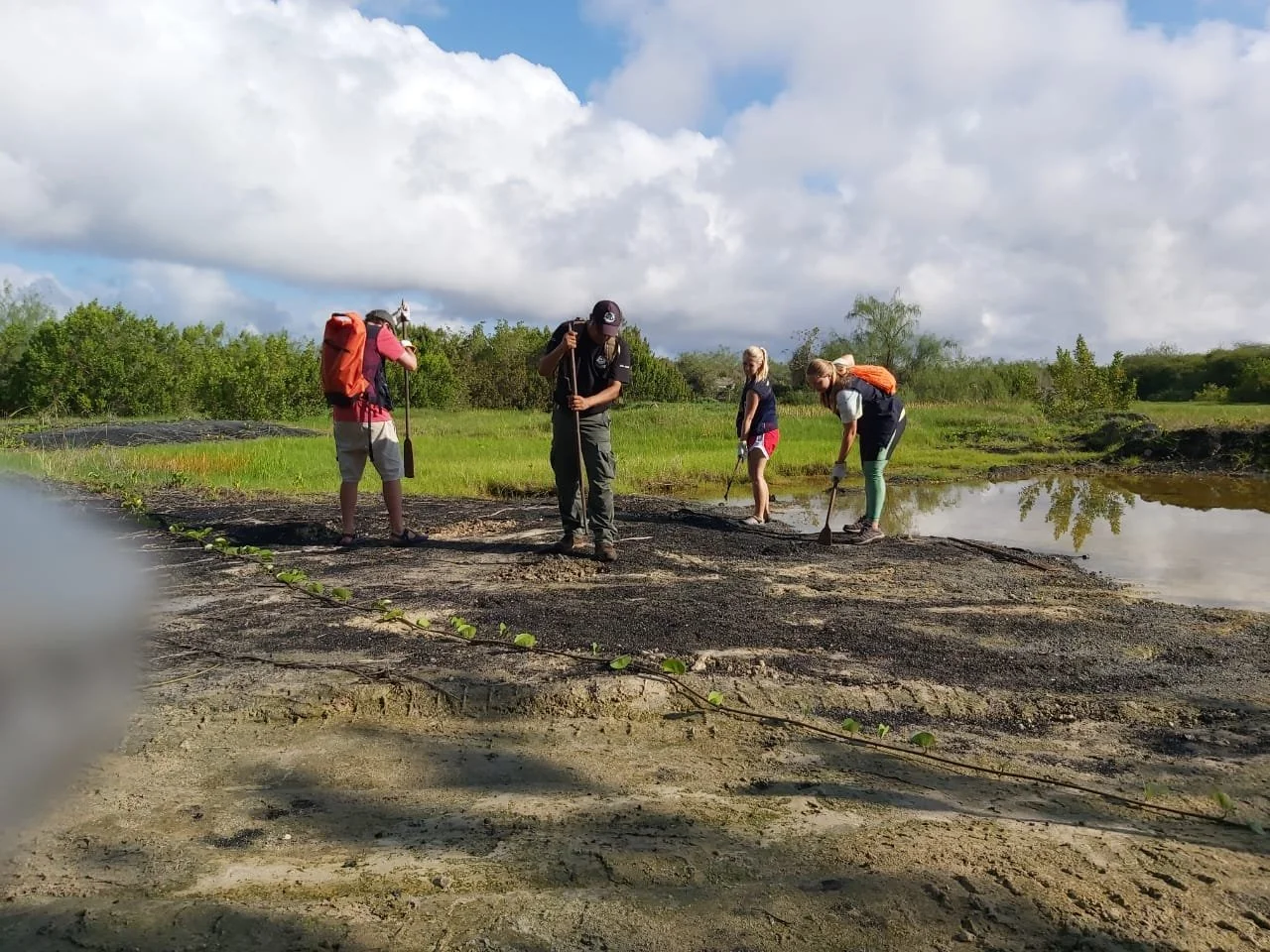
On Isabela, IOI works inside DPNG's own conservation programs, under a formal cooperation agreement with the Government of Ecuador.
SUSTAINABLE AGRICULTURE & FOOD SECURITY
The project that does double duty – food security, and our Carbon Negative status.
In the highlands of Isabela Island, IOI works with local farmers on regenerative agriculture across 105.5 hectares of active restoration and cultivation – up 27% in 2025 – rebuilding soil health for both productivity and carbon sequestration, with minimal external inputs.
The program also supports local milk, banana and vegetable production, reducing the island's reliance on food shipped in from mainland Ecuador – cutting an estimated 57 grams of carbon per kilogram of cargo that no longer needs to travel. Bananas joined the local food programme in 2025.
This is the difference between buying carbon neutrality and building it. Seven years in, the mitigation this program generates is created inside the same communities the rest of our work serves – food security, biodiversity and livelihoods, counted in tonnes.
A parallel mangrove nursery and invasive-species-control program also contributes to carbon mitigation and ecosystem resilience – but its carbon benefit isn't formally counted yet, deliberately, until we can measure it with the same rigor.
CONTRIBUTION
Soil carbon sequestration (105.5 hectares)
Avoided import – milk (562,100 kg)
Avoided import – bananas (21,797 kg)
Avoided import – vegetables
Beach & marine debris clean-up
Total active offsetting from this program
tCO₂e (2024)
94.99
32.04
1.24
0.91
0.01
129.20
Several times IOI's entire Scope 1 & 2 footprint – the largest single reason IOI can call itself Carbon Negative, not just carbon neutral.
An environmental education specialist, funded by IOI, delivers programming at DPNG's annual Campamento Vacacional for local children
A cooking and nutrition educator, funded by IOI, runs classes for Isabela students and families, tied to the local-food-production work of the agriculture program
A dedicated conservation educator, supported jointly with CGREG, teaches local youth and families
Community workshops on agriculture and sustainability topics, run at local venues including senior community centers
EDUCATION
Environmental education for the Isabela community itself.
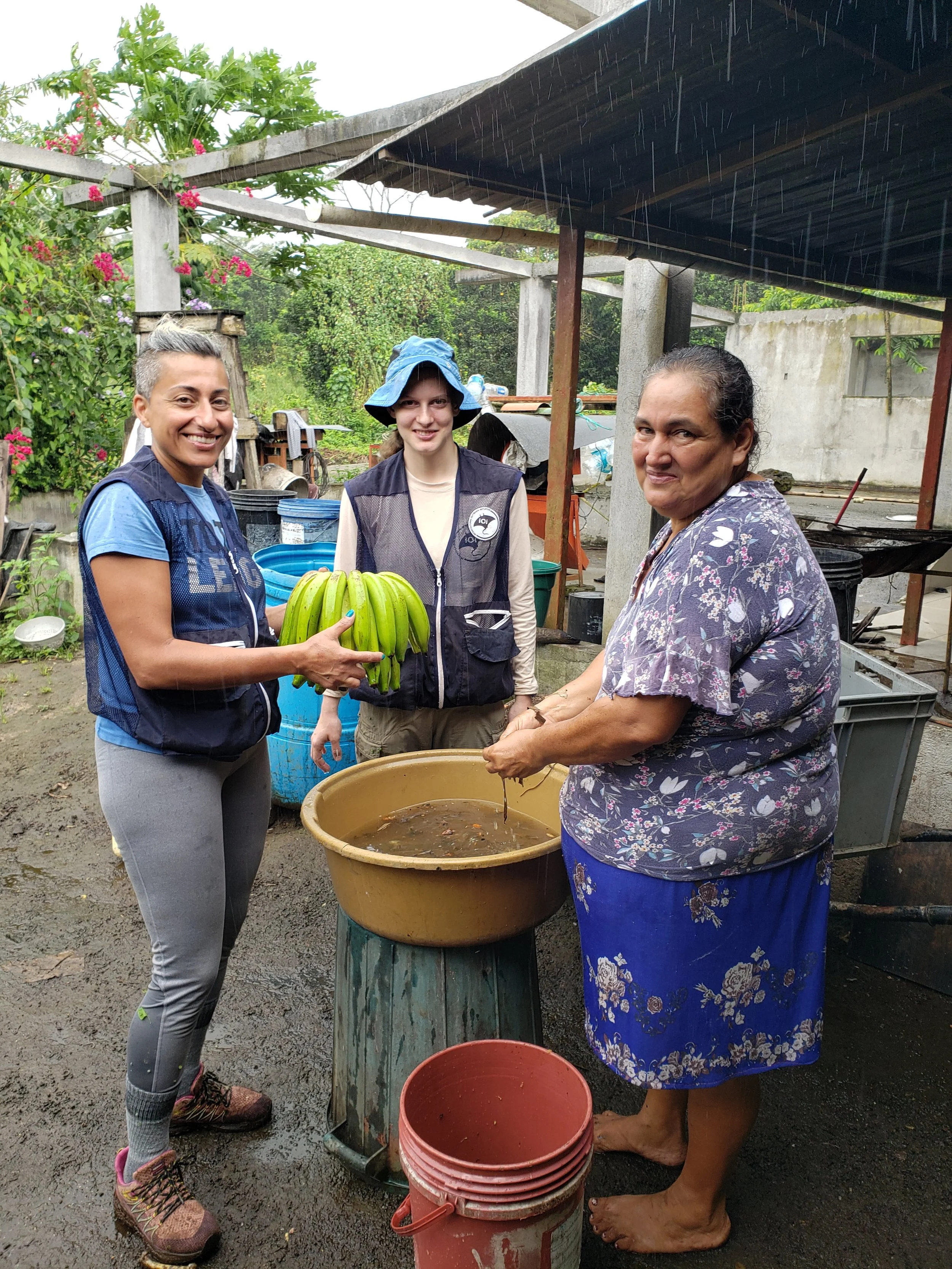
A host-family program: participants live with local families rather than institutional housing, and host families receive a full additional household income for hosting – a direct, recurring economic benefit
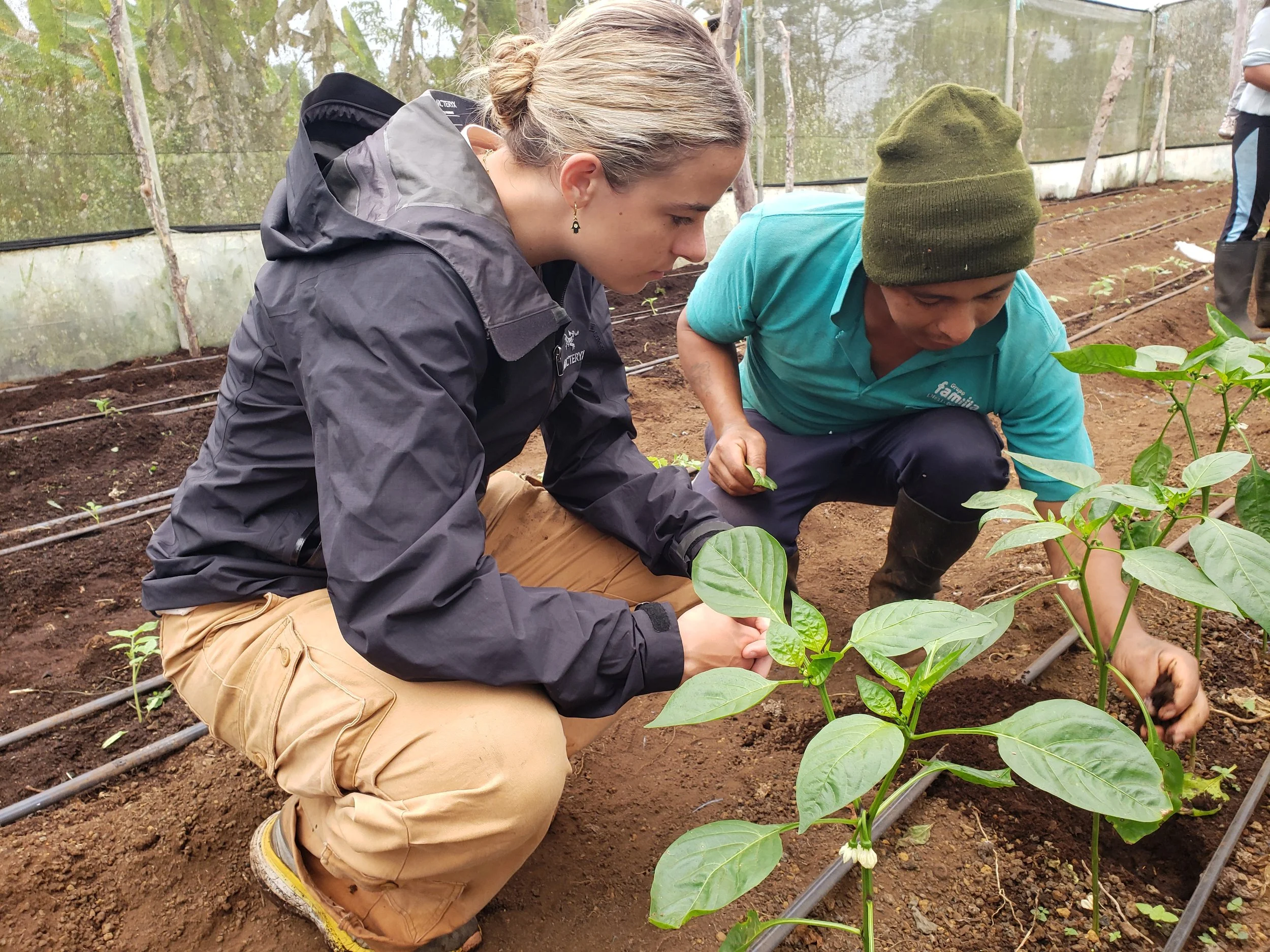
Ongoing collaboration with Ecuador's Ministry of Agriculture and Livestock (MAG) on local agricultural monitoring and support
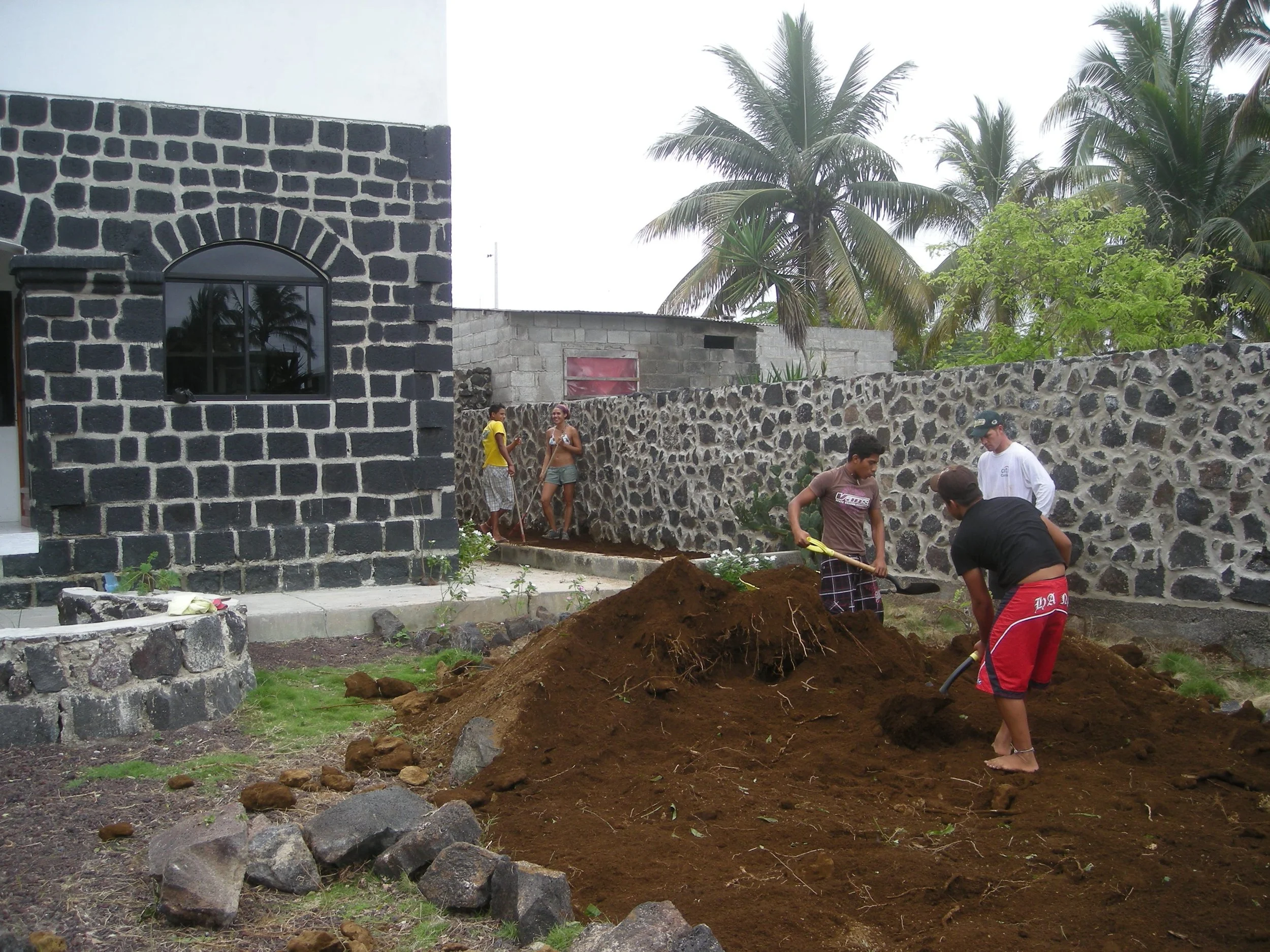
Local infrastructure investment: in 2024, four community infrastructure projects were completed, funded by IOI
Cayos Cochinos: this is structurally the whole point of the new partnership – helping Fundación Cayos Cochinos build stronger ties with local Garifuna communities.
Conservation work only lasts
if the community around it benefits too.
SOCIAL DEVELOPMENT